Johannesburg sits at latitude 26°11′ south. On the December solstice the midday sun climbs to roughly 87° above the horizon — within a few degrees of straight overhead — and the day runs 05:13 to 19:00. Six months later that same noon sun sits low in the northern sky and the day is barely ten and a half hours long.
Two consequences follow, and they explain most of the shading mistakes we're called out to fix.
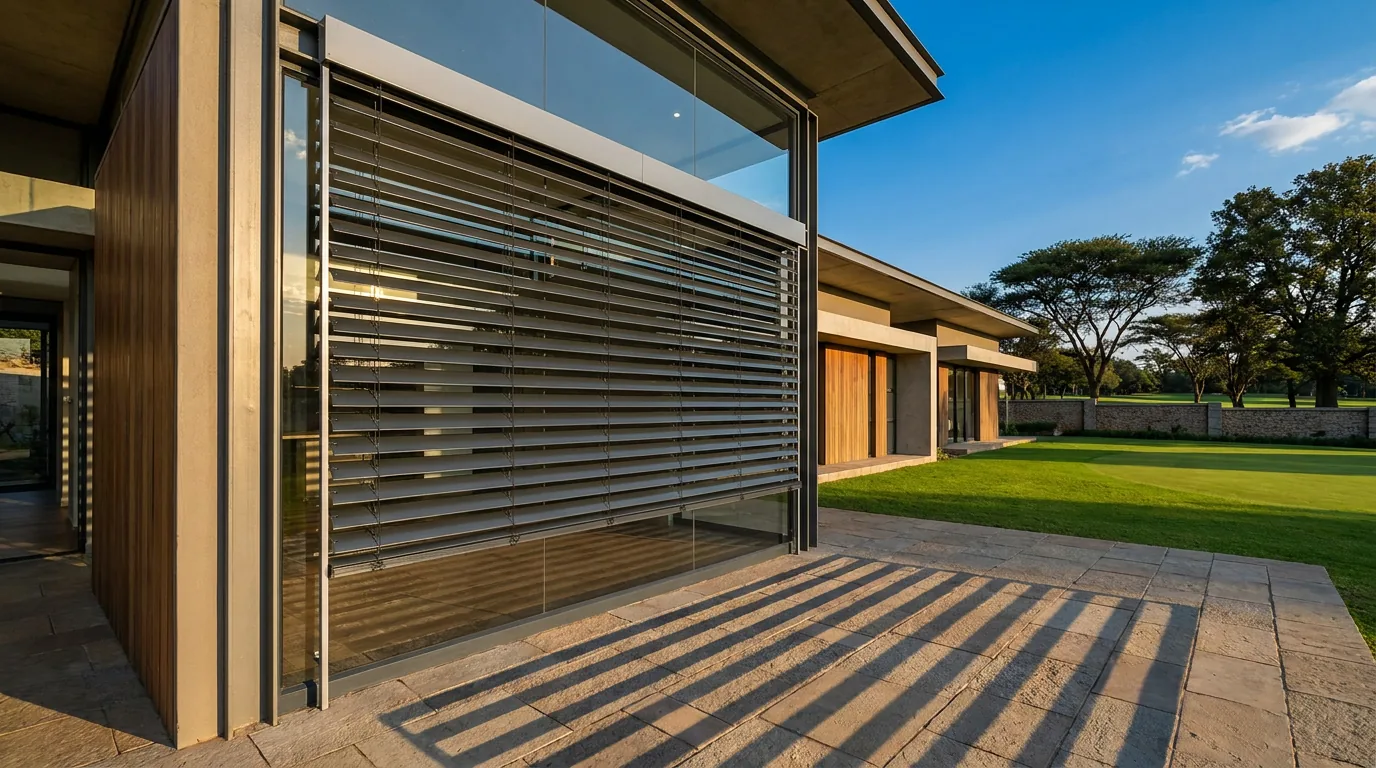
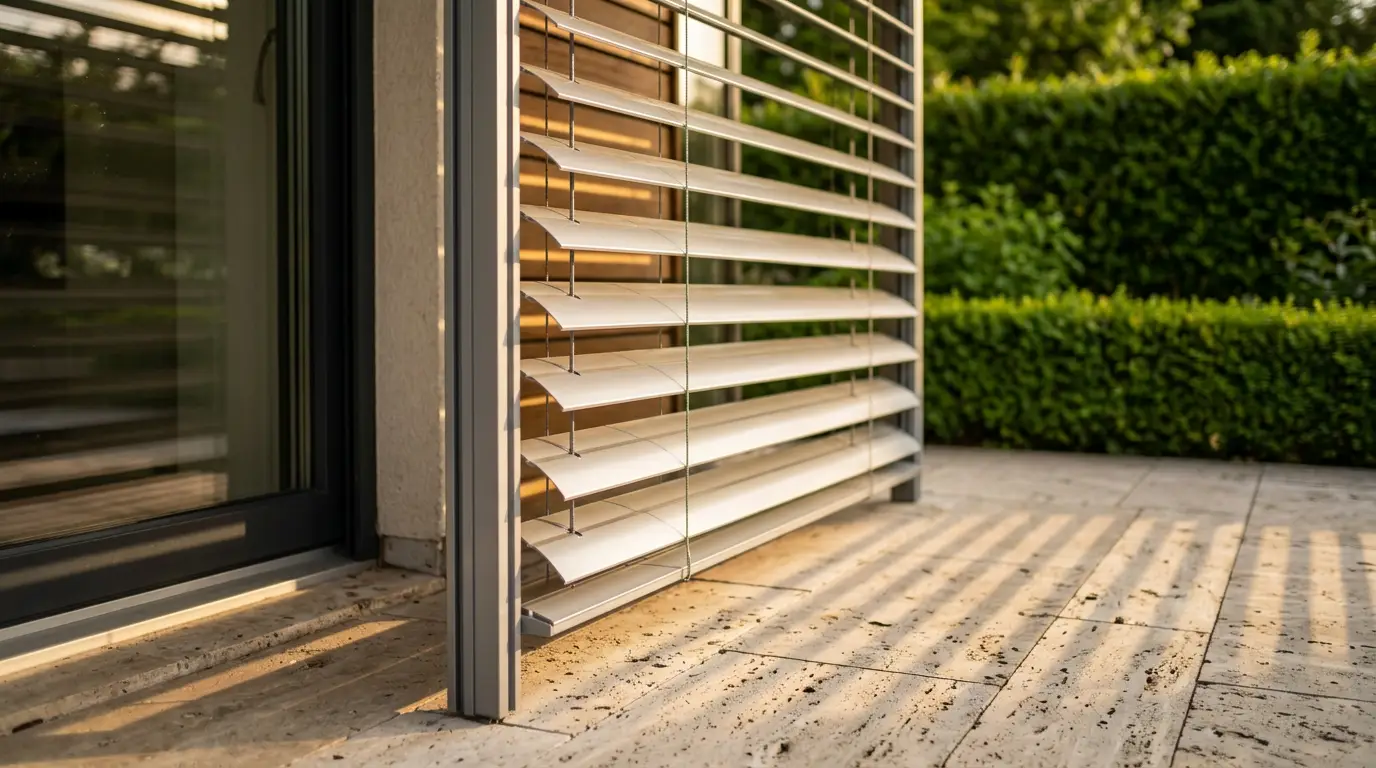
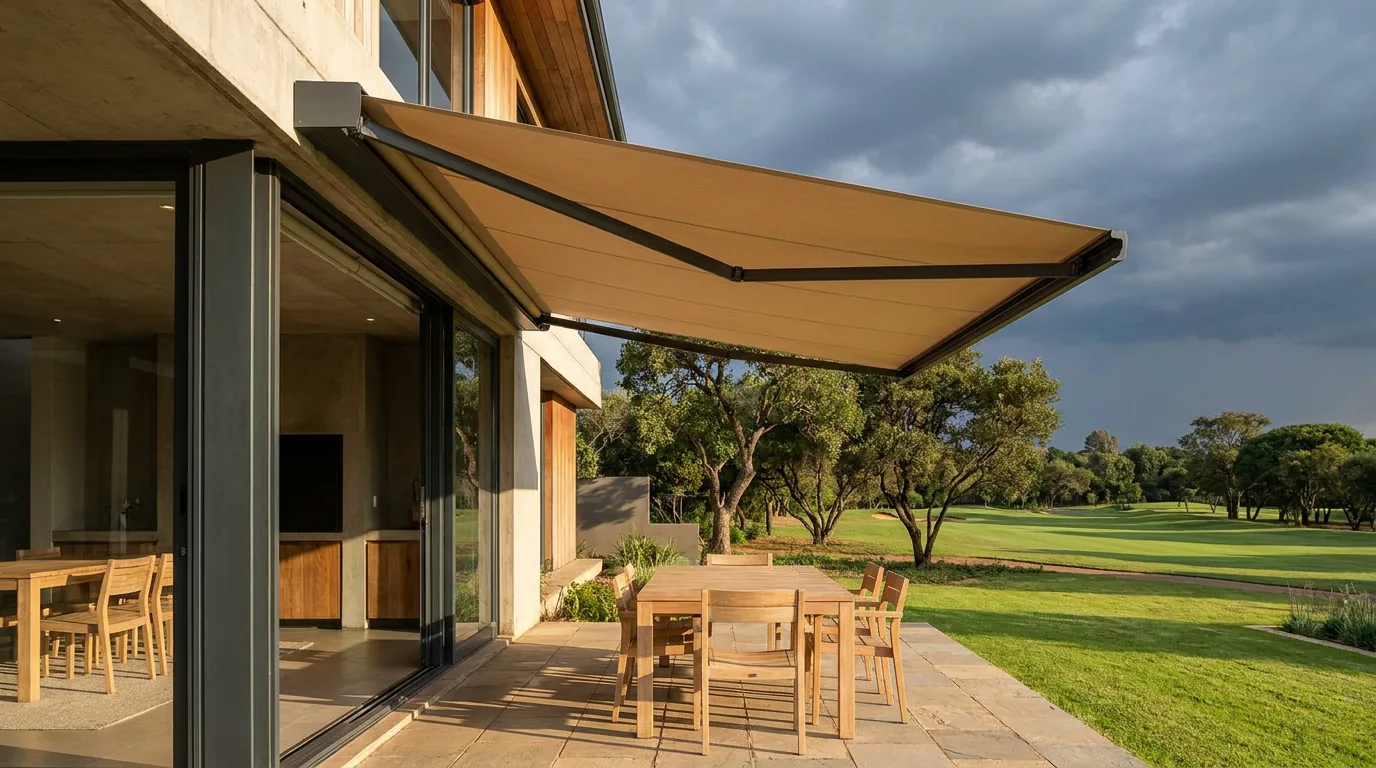
A roof overhang is a summer device, not an afternoon one. An 87° beam barely clears the sill, so an eave stops it. By four o'clock that sun has swung west and dropped, arriving almost horizontally under every overhang you own. Fixed shade can't follow it; adjustable shade can.
North is the elevation to keep, not kill. Here it's the north window that collects winter sun — a roughly 40° beam reaching metres into the room on a bright July morning. Block it permanently and you've bought a colder house for six months.
The Highveld then adds three of its own, each changing a specification.
- Fierce ultraviolet. At 1,753 m under cloudless high-pressure skies, clear-sky summer UV here reaches an index of 13 — a fade-and-fabric question as much as a comfort one.
- A hard storm season. Roughly 700 mm of rain falls October to March, largely as late-afternoon thunderstorms, with supercell frequency peaking in October and November.
- Hail at the wrong hour. Hailstorms typically last about fifteen minutes and arrive mid-to-late afternoon — the hour your awning is most likely to be out.
- A dry, frosty winter. July days reach 18–19 °C and nights drop to around 4 °C with frost common. Gauteng's strongest summer winds come predominantly from the east.