Exterior shading
Stop the heat before it reaches the glass
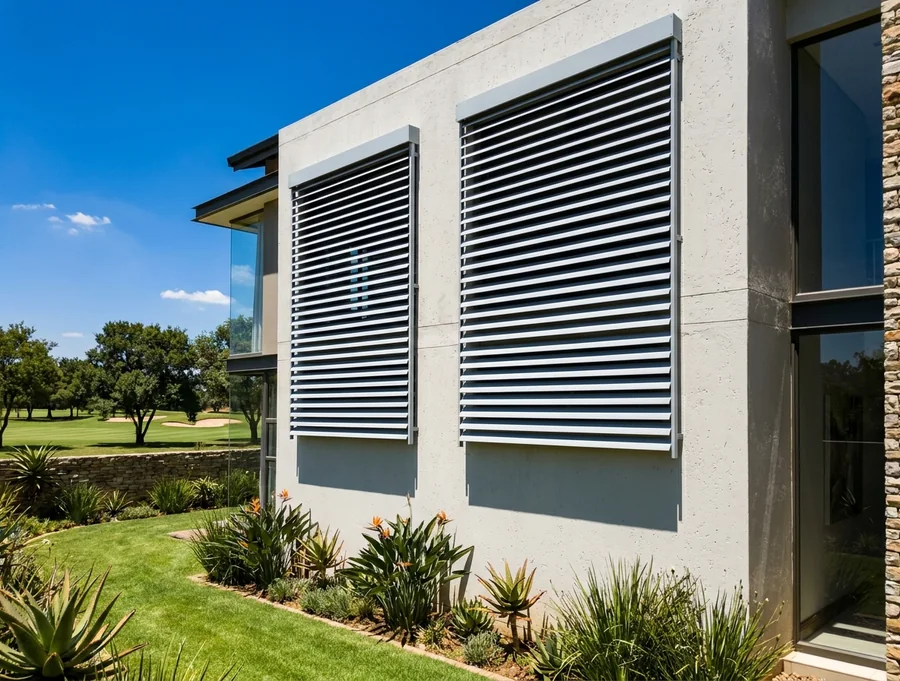
Wide aluminium slats mounted outside the window — the most effective solar control there is, because the heat never gets inside to begin with. The serious answer for a west-facing fairway wall.
The physics, simply put
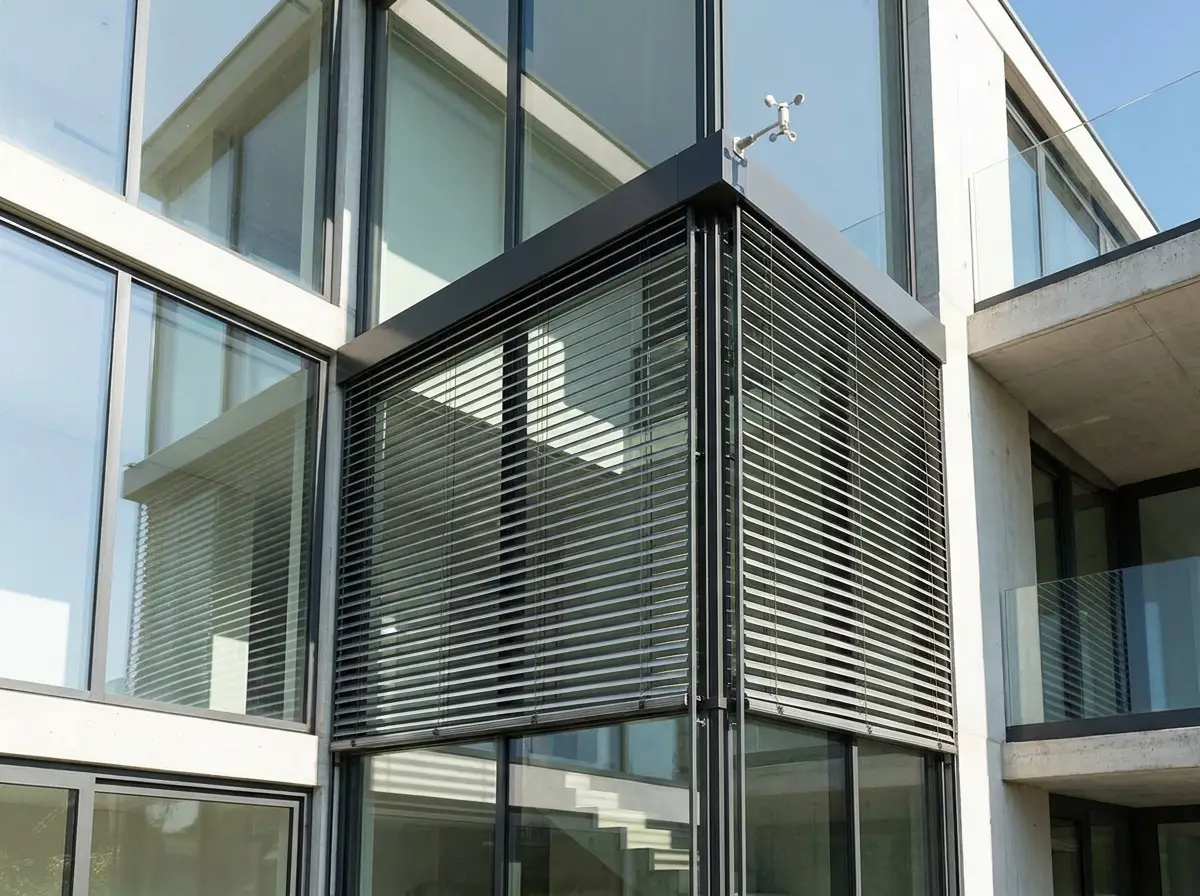
An interior blind manages heat that's already inside the room. An external venetian intercepts it at the glass, before it enters the building at all. On a big north or west elevation — exactly the orientation most River Club homes present to the fairway — the difference in indoor temperature is significant. It's the same principle European and high-end South African architects use to shade glass buildings, applied to a house.
How it's built
Wide aluminium slats, typically in the 60–90mm class, run in guided side rails or cables and tilt and raise like an interior venetian, just on the outside of the glass. Finishes are powder-coated and engineered for weather exposure — sun, rain, and the wind that moves freely across an open fairway.
Motorised, with a wind sensor, as standard
An external venetian is effectively always motorised. A wind sensor auto-retracts the blind once wind speed crosses a set threshold — essential on any exterior product, but especially so on a golf-frontage plot where there's nothing to break the wind before it reaches the house. This isn't an upsell; it's how an exposed exterior blind protects itself.
Planning and installation
External venetians work best when planned at design stage, but retrofitting is possible on most suitable elevations. Facade fixing points need to be assessed on site — this is exactly what the free in-home measure covers, along with an honest read on whether your specific wall is a good candidate.
Worth knowing before you commit
This is a premium spend, and it changes the look of the facade — if your estate has architectural guidelines (most golf estates do), check with the aesthetics committee first. Not a DIY product, and coastal-style exposure would need a marine-grade spec, though that's less of a factor this far inland.
Is your fairway wall a good candidate?
A free in-home measure includes an honest read on your facade — no pressure either way.
Book your free measureWhat it costs
The cost of stopping sun outside the pane
External venetians are engineered aluminium fixed to the face of the building, so the number sits well above anything interior: R3,000 to R4,500 per square metre installed hand-operated, and R4,500 to R6,500 motorised. On an exposed stand almost every set goes in motorised, because a wind sensor that lifts the slats before a storm arrives is the reason the product lasts.
Slat width, the guide channels and what is actually behind the render all move a job inside its band, and a narrow opening carries a minimum charge. This is also the product an estate aesthetics committee is most likely to have a view on, so we bring a colour and profile specification to the free measure and quote once that is clear.