Automation
One app, every blind, no dangling chains
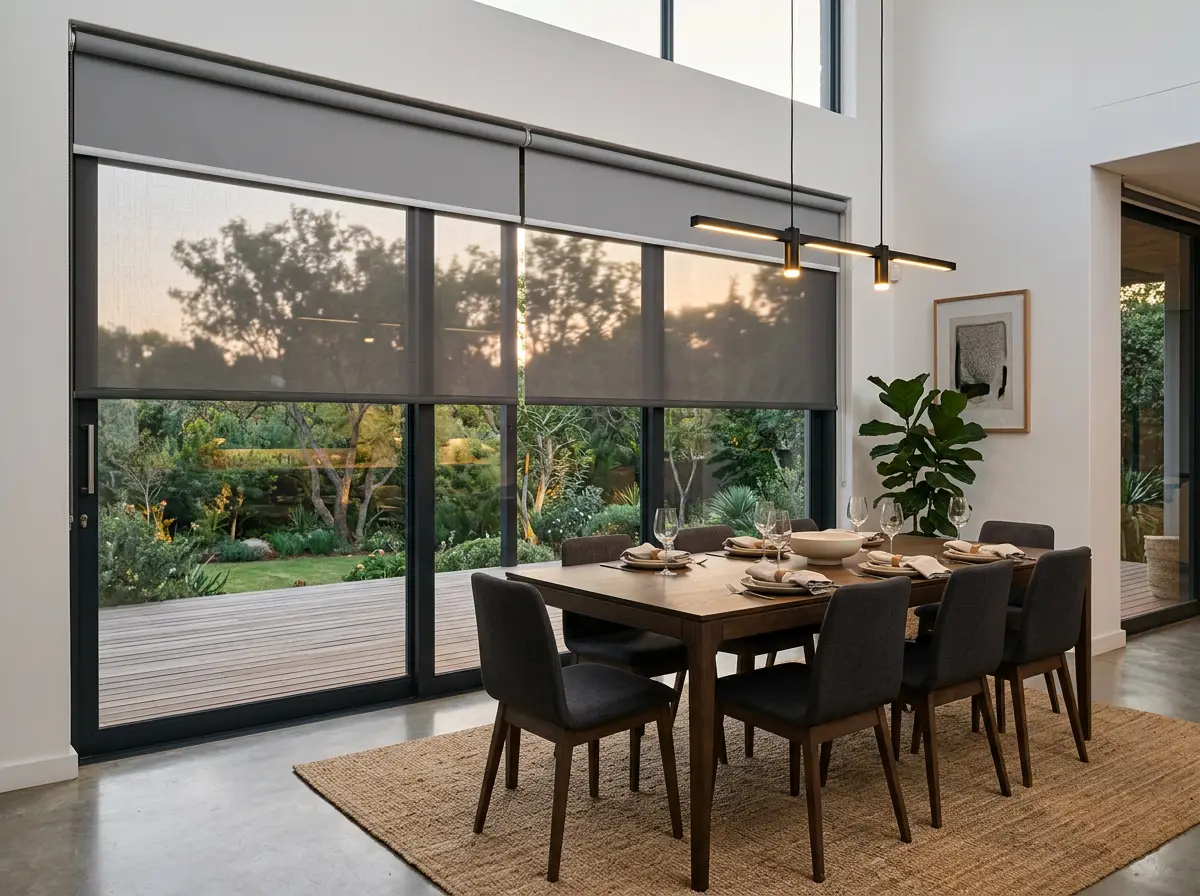
Tubular motors control by remote, wall switch, phone app, schedule or sensor. On a house with as much glazing as a fairway-facing home carries, it moves from nice-to-have to the only practical option for the biggest walls.
Power options
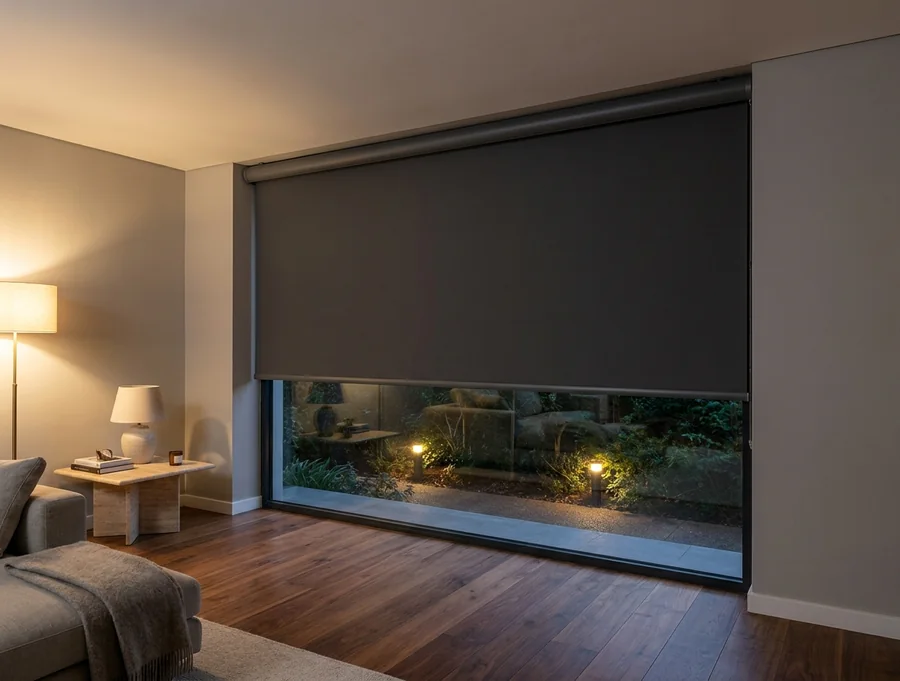
- Rechargeable battery motors — no wiring, retrofit-friendly, charged every few months via a USB-style charger. The default for apartments and retrofits.
- Wired 220V motors — permanent, no charging, best suited to new builds, renovations, and big or heavy systems including exterior products. Needs an electrician and some planning.
- Solar trickle — an option for awkward positions where neither of the above is practical.
Control, by lifestyle rather than tech spec
A handset remote runs one blind or every blind in the house from a single unit. App control puts every blind in your pocket — useful from the couch, more useful from the office when you're wondering if you left the west-facing blinds up. Schedules open bedroom blinds with sunrise and drop the fairway-side blinds at a set time each summer afternoon without you touching anything.
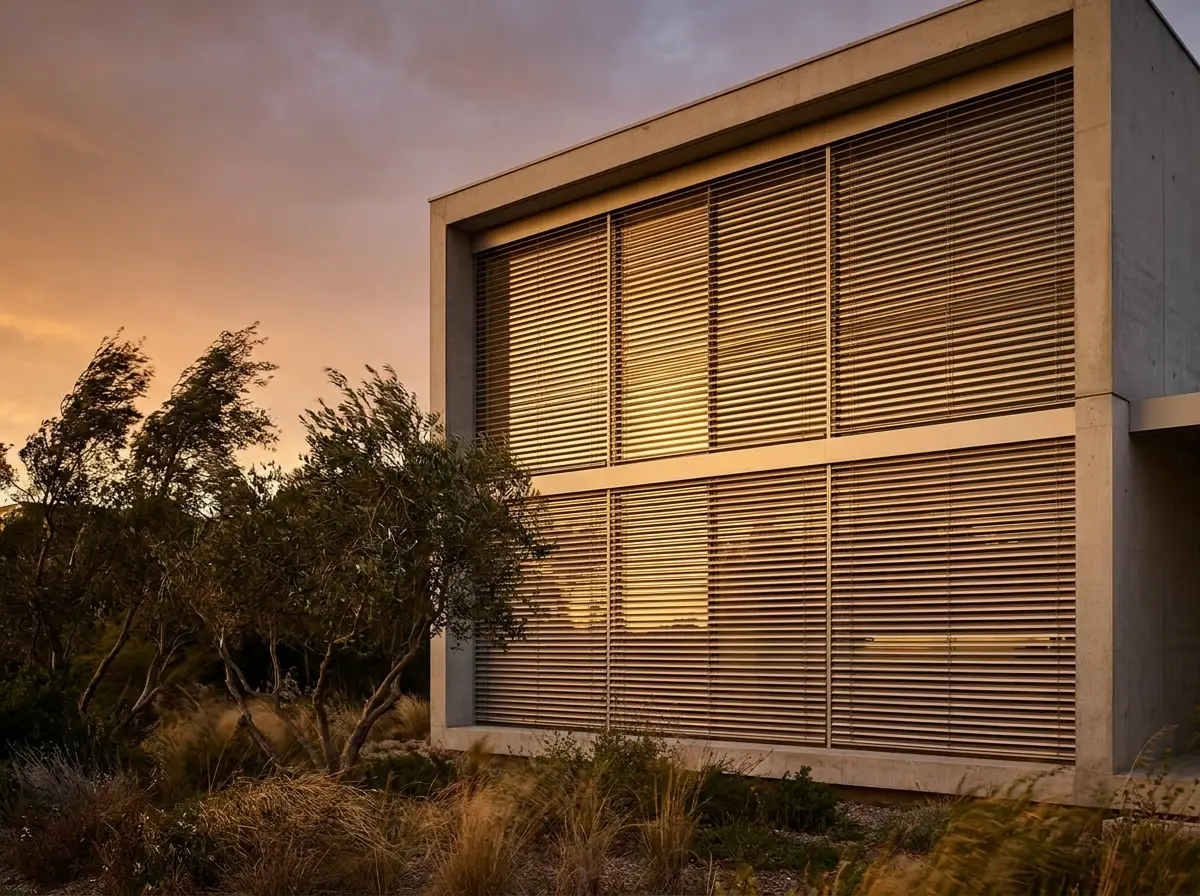
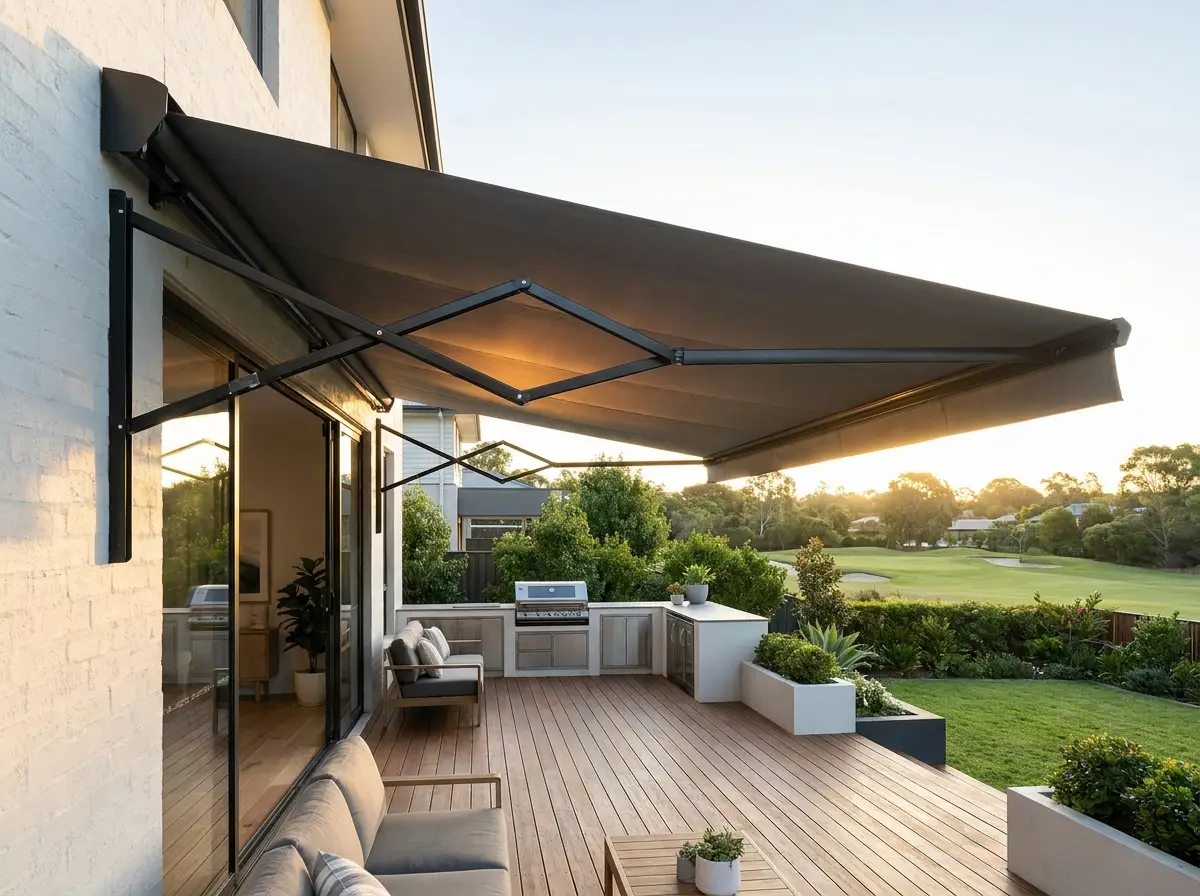
Sensors do the safety-critical work: sun sensors drop shading automatically on the hottest elevation, and wind sensors retract awnings and exterior screens before a highveld storm or a gust off the open fairway gets to them. Voice and smart-home integration is there for anyone who wants the whole house on one system.
When it stops being optional
Spans too wide or heavy for a chain, blinds above a stair void or double-volume space, concealed ceiling-recess systems, exterior venetians, awnings, zip screens, and a multi-blind wall of glass where you want one button for six blinds — these are the cases where motorisation isn't an upgrade, it's the only version of the product that actually works day to day.
Worth knowing before you order
No dangling chains makes this the most child-safe operation available. Motors are quiet, not silent — quality units carry multi-year guarantees, and battery motors do need that periodic charge, which your consultant will set expectations on at the quote stage rather than leaving as a surprise.
Work out what deserves a motor
Your consultant will tell you honestly which blinds need it and which don't.
Book your free measureWhat it costs
What automation adds, by product
Motorisation is priced by the thing it drives, so the honest answer is a spread: roughly R2,500 to R7,500 per square metre installed across the range on this site. Reckon on R2,500 to R3,800 per square metre for a motorised blockout or sunscreen roller, R4,500 to R6,500 for motorised external venetians, and R5,500 to R7,500 per square metre of projection for a motorised awning carrying a wind sensor.
Every one of those is a guide band per square metre installed, not a quotation, and a minimum charge still applies to small windows. The figure turns on the room more than the catalogue: how many blinds run off one control, whether a battery tube or a wired motor suits the wall, and where the nearest power is. All three are settled at the free measure, with the written per-window price to follow.